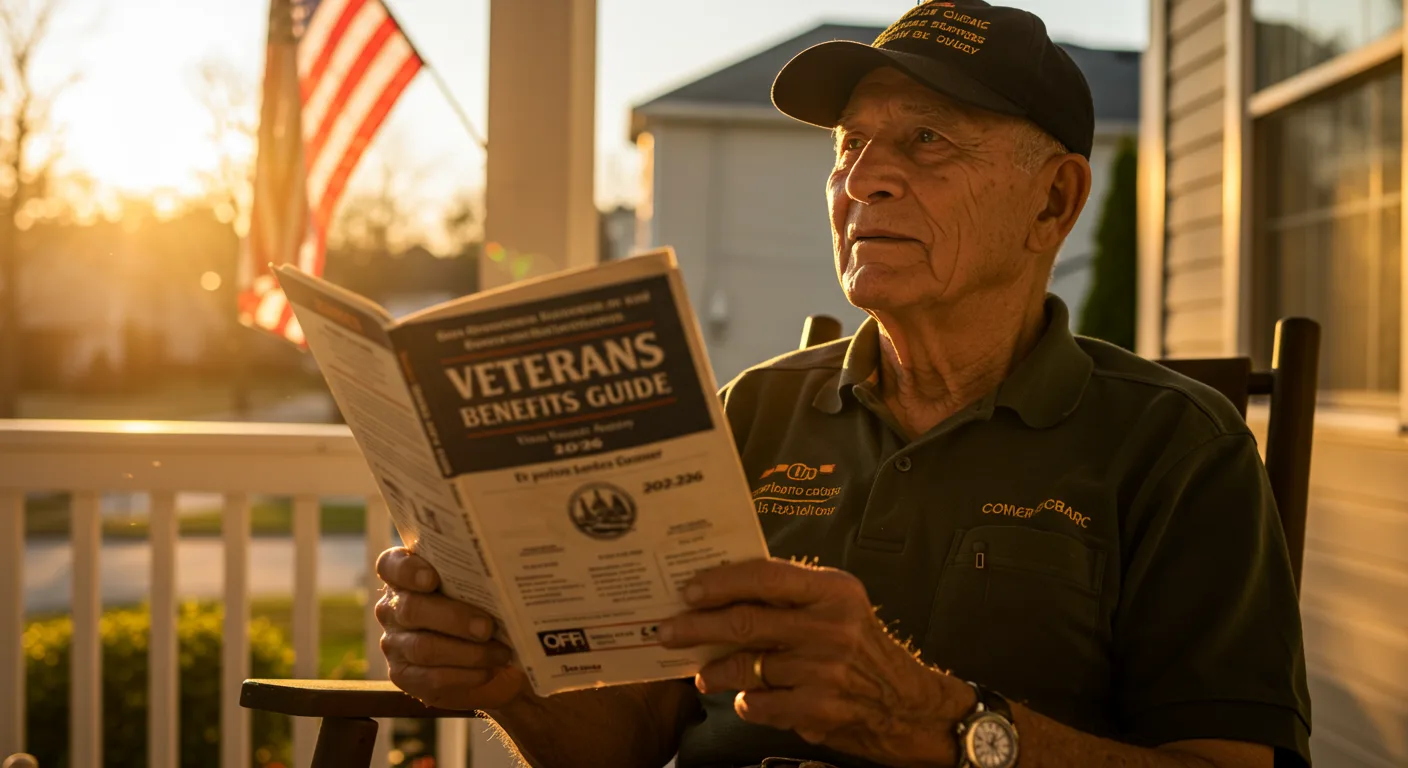
A staggering 70% of military veterans transitioning to civilian life face significant challenges in securing meaningful employment that leverages their skills, often citing a lack of civilian-recognized education as a primary barrier. This isn’t just a statistic; it’s a call to action for every veteran considering their post-service future. But what if I told you that navigating the world of higher education isn’t as daunting as it appears, and that with the right approach, it can be your most powerful tool for civilian success?
Key Takeaways
- Over 90% of veterans are eligible for significant educational benefits through programs like the Post-9/11 GI Bill, often covering 100% of tuition at public institutions.
- Despite generous benefits, nearly 30% of eligible veterans do not fully utilize their GI Bill benefits, leaving millions of dollars in educational support untapped.
- Veterans pursuing degrees in STEM fields (Science, Technology, Engineering, Mathematics) see an average 20% higher starting salary post-graduation compared to other disciplines.
- The median time for veterans to complete a bachelor’s degree is 5.5 years, often due to part-time enrollment or breaks, highlighting the need for strategic academic planning.
- Connecting with university veteran services offices early can increase your likelihood of graduation by up to 15%, providing critical support for academic and transitional challenges.
My work over the past decade, helping countless veterans translate their military experience into civilian opportunities, has shown me one undeniable truth: education is the great equalizer. It bridges the gap between highly specialized military roles and the often-confusing demands of the civilian job market. When I started my career in veteran outreach, I saw firsthand the frustration of individuals with incredible leadership and technical skills struggling to get past automated HR filters simply because they lacked a degree. It’s a systemic problem, but one you, as a veteran, have the power to overcome.
Only 1 in 4 Veterans Believe Their Military Training Directly Translates to Civilian Jobs
This statistic, from a recent study by the RAND Corporation, is a gut punch, isn’t it? It highlights a profound disconnect. Veterans possess an incredible array of skills—leadership, problem-solving under pressure, technical proficiency, global awareness—yet many feel these assets are undervalued or misunderstood by civilian employers. I’ve heard this sentiment echoed in countless conversations at the University of South Florida’s Office of Veteran Success, where I often consult. We see veterans coming in, unsure how their combat medic training translates to a healthcare administration degree, or how their logistical expertise applies to supply chain management. The conventional wisdom often tells veterans to “just apply” and hope for the best, or to downplay their military experience. I couldn’t disagree more forcefully. Your military training is not a liability; it’s a powerful foundation. The problem isn’t the skills themselves, but the language used to describe them in a civilian context, and that’s where formal education steps in. A degree provides the universally recognized credential that validates those skills and gives you the lexicon to articulate them effectively. For instance, a client I worked with last year, a former Marine Corps communications specialist, was struggling to get interviews for IT roles. He had managed complex networks in austere environments, but his resume didn’t speak the language of “network architecture” or “cybersecurity protocols.” We guided him towards a Bachelor of Science in Information Technology at the Georgia Institute of Technology, and suddenly, his military experience, framed by academic coursework, became a massive advantage. He graduated with multiple job offers, something that felt impossible just two years prior.
Veteran homeowners. Want to lower your monthly payments?
See if a VA Cash Out Loan or VA Home Loan can put cash in your pocket or help you buy with $0 down. A specialist will review your options, free.
- VA Cash Out Loan: use up to 100% of your home’s equity
- VA Home Loan: buy a home with $0 down payment
- No cost, no obligation eligibility check





You’re all set.
A VA loan specialist will reach out shortly to review your Home Loan and Cash Out options.
Over 90% of Veterans Are Eligible for Significant Educational Benefits
Let that sink in. The vast majority of you have access to incredible financial support for higher education, primarily through the Post-9/11 GI Bill. This benefit, for eligible veterans, often covers 100% of tuition and fees at public in-state institutions, provides a monthly housing allowance, and even a stipend for books and supplies. It’s a goldmine, yet I’m consistently astonished by how many veterans either don’t know the full extent of their benefits or are intimidated by the application process. I regularly encounter veterans at the Georgia Department of Veterans Service who believe they only qualify for a fraction of what’s available. The process isn’t as complex as some make it out to be. My strong advice? Start by visiting the official U.S. Department of Veterans Affairs (VA) website. Their education section is comprehensive and provides clear steps for applying. Don’t rely on secondhand information or outdated forums; go directly to the source. The VA’s “eBenefits” portal is your best friend here. Create an account, explore your eligibility, and apply. It’s a few hours of paperwork that can literally save you tens of thousands of dollars. I’ve seen too many veterans take out unnecessary student loans when their GI Bill could have covered everything. This is a benefit you’ve earned through your service; use it!
Nearly 30% of Eligible Veterans Do Not Fully Utilize Their GI Bill Benefits
This data point, sourced from a Congressional Budget Office report, is, frankly, infuriating. Think about it: millions of dollars in educational support, earned through sacrifice, going unused. Why? My professional experience suggests a few key reasons. First, the “use it or lose it” mentality of the older Montgomery GI Bill sometimes incorrectly carries over, leading veterans to believe their Post-9/11 benefits expire quickly. While there are time limits (generally 15 years from your last discharge date for those separating after January 1, 2013), many veterans have ample time. Second, many veterans feel overwhelmed by the sheer number of educational options or doubt their academic abilities after years away from a classroom. This is a narrative we must actively combat. Your military experience has prepared you for rigor and discipline, qualities essential for academic success. Third, some simply don’t see the immediate value. They jump into the first available job, often underpaid, and postpone education indefinitely. This is a critical mistake. While immediate income is important, investing in your education now pays dividends for decades. I had a veteran client in Atlanta who initially dismissed going back to school, saying he couldn’t afford to take time off work. We worked through a strategy where he enrolled part-time at Georgia State University, using his GI Bill to cover tuition and the housing allowance to supplement his income. It took him longer, yes, but he eventually earned his business degree and secured a management position paying nearly double his previous salary. He often tells me it was the best “long-term investment” he ever made.
Veterans with a Bachelor’s Degree Earn 40% More Annually Than Those with Only a High School Diploma
This isn’t just a statistic; it’s a profound economic reality, consistently demonstrated by data from the Bureau of Labor Statistics. The return on investment for a college degree, especially for veterans, is undeniable. While military experience is valuable, the civilian job market still heavily favors candidates with formal degrees, particularly for roles that offer significant career progression and higher salaries. I’ve seen this play out repeatedly in the Atlanta metropolitan area. Companies like Delta Air Lines and The Home Depot, both major employers of veterans, often have degree requirements for their management and specialized technical positions. While they value military service, a degree often serves as the non-negotiable entry ticket. This isn’t about diminishing your service; it’s about understanding the current rules of the game. My editorial aside here: anyone who tells you a degree isn’t necessary in 2026 for long-term career growth is giving you bad advice, plain and simple. While vocational training and certifications have their place (and I’m a huge advocate for them in specific fields), a bachelor’s degree provides a breadth of knowledge, critical thinking skills, and a credential that opens doors to a wider range of opportunities and, crucially, higher earning potential. It’s not just about the first job; it’s about your entire career trajectory.
The Conventional Wisdom: “Just Pick a Major You Love”
This piece of advice, often doled out by well-meaning but ill-informed guidance counselors, is perhaps the most dangerous for veterans. While passion is important, a purely passion-driven approach to choosing a major without considering market demand can lead to significant frustration and underemployment. For veterans, with finite GI Bill benefits and often a desire to quickly establish a stable civilian career, a strategic approach is paramount. My professional interpretation is that veterans should prioritize marketable skills and industry demand, especially in fields projected for growth. The O*NET OnLine database, sponsored by the U.S. Department of Labor, is an invaluable tool for researching career outlooks, typical education requirements, and median salaries. I often guide veterans to consider STEM fields, healthcare, and business analytics. Why? Because these sectors consistently show high demand and offer competitive salaries. For example, a veteran client with a background in military logistics was torn between a history degree (his passion) and a supply chain management degree (highly marketable). We looked at the numbers: the median salary for a historian was significantly lower than for a supply chain manager, and job growth projections were starkly different. He chose supply chain management at Kennesaw State University, and while he still reads history books for pleasure, his career path is now incredibly robust. This isn’t to say you can’t pursue your passion, but perhaps consider it as a minor, or as an advanced degree once your financial foundation is solid. Be pragmatic. Your future self will thank you.
Embarking on your educational journey after military service is a powerful step towards building a fulfilling and prosperous civilian life. By strategically utilizing your earned benefits, choosing a marketable field of study, and leveraging the invaluable skills gained in service, you can confidently navigate the transition and secure a future worthy of your sacrifice.
How do I start applying for my GI Bill benefits?
Begin by visiting the official VA.gov education benefits application page. You’ll typically need to fill out VA Form 22-1990, “Application for VA Education Benefits.” It’s best to have your DD-214 (Certificate of Release or Discharge from Active Duty) handy, as well as your social security number and bank account information.
What’s the difference between the Post-9/11 GI Bill and the Montgomery GI Bill?
The Post-9/11 GI Bill (Chapter 33) is generally more comprehensive, often covering 100% tuition at public schools, a monthly housing allowance, and a book stipend. The Montgomery GI Bill (Chapter 30) requires you to pay into it during service and offers a fixed monthly payment directly to you. Most veterans separating after 9/11/2001 find the Post-9/11 GI Bill more advantageous, but you can only use one at a time. The VA website provides a detailed comparison.
Can I use my GI Bill for something other than a traditional four-year degree?
Absolutely! The GI Bill can be used for a wide range of educational pursuits, including vocational training, apprenticeships, on-the-job training, flight training, and even some licensing and certification exams. This flexibility is often overlooked, but it’s a fantastic option for veterans looking for quicker entry into skilled trades or specific professional fields. Always check with the VA for approved programs.
What resources are available at universities specifically for veterans?
Most colleges and universities have a dedicated Veteran Services Office or a similar department. These offices are invaluable! They help with GI Bill certification, provide academic advising, connect you with tutoring services, offer peer mentorship, and often have specific programs to help with the transition to student life. I always recommend reaching out to this office at any institution you’re considering before you even apply.
How do I choose the right school and program for me?
This requires careful consideration. Beyond looking at your interests, research career outlooks for potential majors using resources like CareerOneStop. Look for schools with strong veteran support services and a good reputation in your chosen field. Consider factors like location, class size, online vs. in-person learning, and whether the school is a “Yellow Ribbon Program” participant if your GI Bill doesn’t cover 100% of non-resident or private tuition. Don’t be afraid to visit campuses or attend virtual info sessions.